 NEXUS WATER
Scattered evidence
Project data often lives across meters, spreadsheets, reports and different organizations.
The water economy
Companies, cities and project developers are investing in water conservation, recycling, restoration and new water supply. But proving what those projects actually delivered is still surprisingly difficult.
Nexus connects real-world water projects to the data, evidence and review needed to show what happened, where it happened, when it happened and how much water was affected.
The result is a traceable water outcome that supports sustainability reporting and project funding, and that can become a verified water credit after independent review.
The problem
Organizations around the world are setting ambitious goals to conserve water, replenish watersheds and improve water resilience. The challenge is proving that an investment created the outcome it claims.
A meter reading by itself is not enough. A credible water outcome also needs context: where the project happened, what changed, how the result was calculated, what period it covers, who owns the claim and whether that same benefit has already been counted somewhere else.
Nexus brings that information together into one evidence trail.
Project data often lives across meters, spreadsheets, reports and different organizations.
Two projects can describe a “gallon saved” very differently without a consistent methodology.
Buyers and sponsors need to understand exactly what they funded and the evidence behind the result.
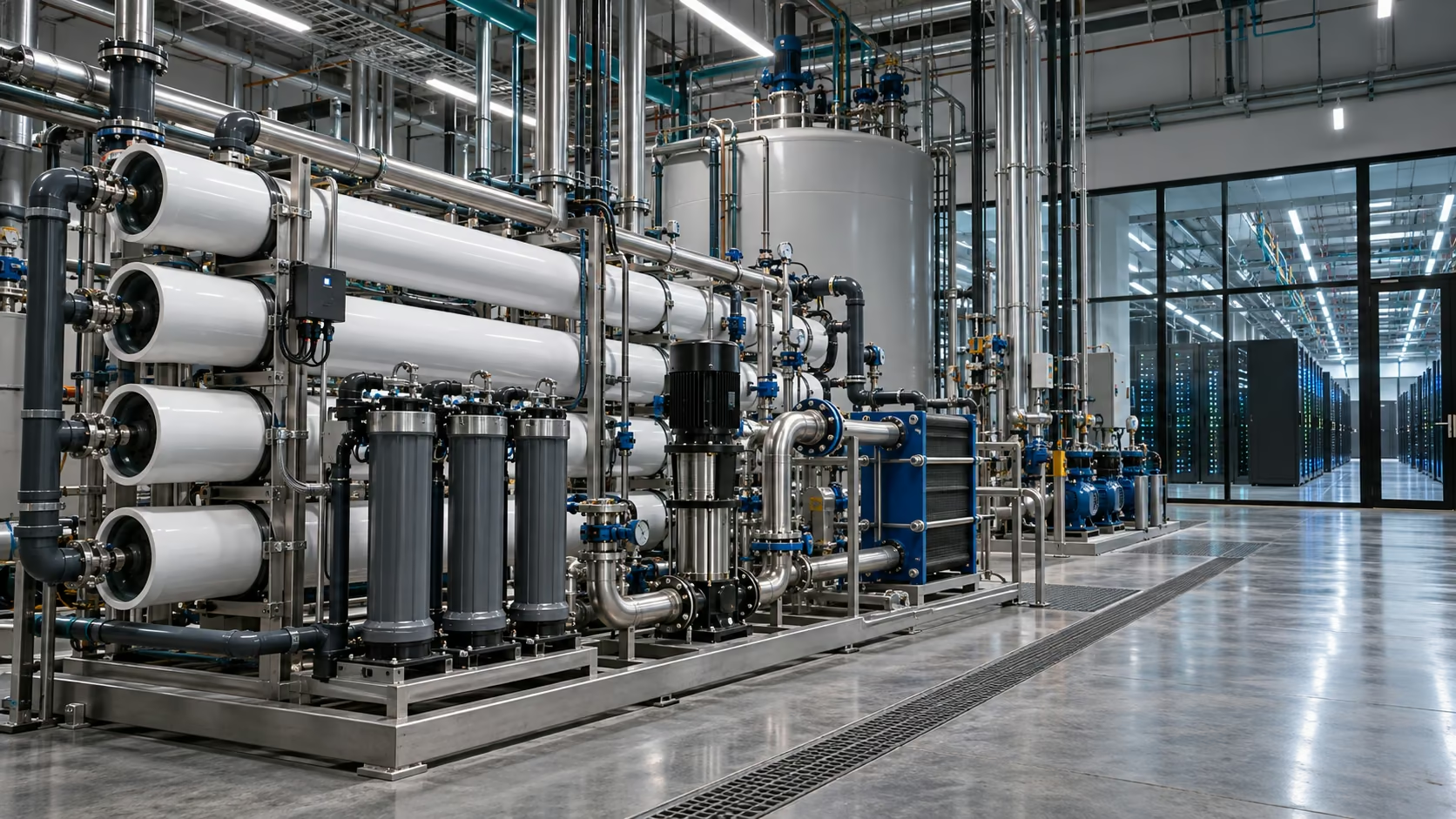
Physical systems
Water projects do not all use the same hardware, and they should not have to.
Nexus is being designed to work with real-world sources such as water meters, compatible AMR/AMI systems, IoT sensors, utility data, project APIs and reviewed project records.
The goal is not to replace existing water infrastructure. The goal is to make its data useful as evidence.

How it works
Nexus creates a continuous evidence trail from the project in the field to the final report or water credit.

1 Measure
Capture water data from meters, sensors, project systems or approved records.
2 Add context
Connect the data to a specific project, location, reporting period, baseline and methodology.
3 Check
Look for missing information, unusual readings, duplicate claims and other integrity issues.
4 Verify
Package the evidence so qualified reviewers can independently evaluate the result when verification is required.
5 Report
Create a traceable record showing the outcome, the method used and the evidence supporting it.
This process is often called measurement, reporting and verification, or MRV.
Nexus classification
Not every gallon represents the same environmental result.
Nexus classifies water outcomes into four categories, kept separate so a buyer can understand exactly what happened instead of purchasing a generic claim labeled simply “water.”

Water use reduced against an appropriate baseline, for example through efficiency, leak reduction or conservation.
Draft method SAVE

New usable water supply produced through an eligible technology or project, with the source and operating conditions recorded.
Draft method AWG

Water treated and reused instead of requiring additional freshwater withdrawals.
Draft method REUSE

Water returned to, retained in or made available to a watershed through an eligible restoration or replenishment activity.
Draft method REPLENISH
Every outcome can carry its location, reporting period, methodology and supporting evidence.
Open standard
Nexus is developing an open specification for describing a water outcome in a consistent way: the amount of water involved, where the activity occurred, when it occurred, how the result was calculated, what evidence supports it, who has rights to the claim and what verification has taken place.
We are not trying to reinvent water science.
The Nexus evidence layer is designed to work with established water-stewardship methodologies where appropriate and make their results easier to record, audit and exchange.
For example, WRI’s Volumetric Water Benefit Accounting guidance emphasizes local catchment context, scientifically defensible methods, conservative assumptions, appropriate time periods and avoiding double counting. These are voluntary frameworks rather than tradable-credit standards.
Nexus is not affiliated with or endorsed by WRI.

Draft for consultation. DRAFT FOR CONSULTATION · NVWS v0.1. Not approved or independently assured. No credits issued or offered. Not endorsed by any referenced organization.

Evidence
A Nexus water record is more than a number.
A Nexus record connects a water result to its source data, location, reporting period, methodology, calculations, documents and verification status.
Instead of asking a buyer to trust a claim at face value, Nexus is designed to let them follow the evidence behind it.
Blockchain can preserve the history and integrity of the record. The evidence and review establish whether the water outcome itself is credible.
Governance
The shared rules behind Nexus are designed to be transparent: how projects are described, what evidence is required, how records are created and how the system evolves over time.
Nexus Water DAO can govern the protocol and its shared infrastructure, while project claims are designed to be evaluated by qualified independent parties.
The organization recording an outcome should not be the only organization deciding whether that outcome is credible.

The protocol and its shared infrastructure. Claims are designed for independent review.
Whether a project claim is credible. The recorder of an outcome is not the only reviewer.
Pilot
Nexus is beginning with a simple question:
Can we make a water outcome easy enough to understand that a company, utility, auditor or buyer can examine the evidence and confidently see how the result was reached?
The Nexus pilot tests the complete journey, from field data and project documentation through calculation, review and reporting.
We are starting with the evidence layer first. Once an outcome has a credible methodology, clear ownership and sufficient verification, that record can support a marketable environmental asset.

Evidence first. Asset second.
Fixed-fee pilots from $7,500, scoped on a call.
In the field
Start with one project, one source of data and one methodology. Prove the evidence chain works. Then scale it across buildings, treatment facilities, conservation programs, industrial reuse systems and entire portfolios.
Nexus is being built to connect the physical water economy with the organizations willing to fund measurable outcomes.

Whether you’re funding conservation, developing new water infrastructure, operating a reuse project or working toward a corporate water commitment, Nexus can help turn the result into evidence you can understand and defend.
Build a pilot with Nexus.